Privilege Ladders Across Formats: How Tiered Mobile Networks Channel Bonuses Into Unified Prize Pools
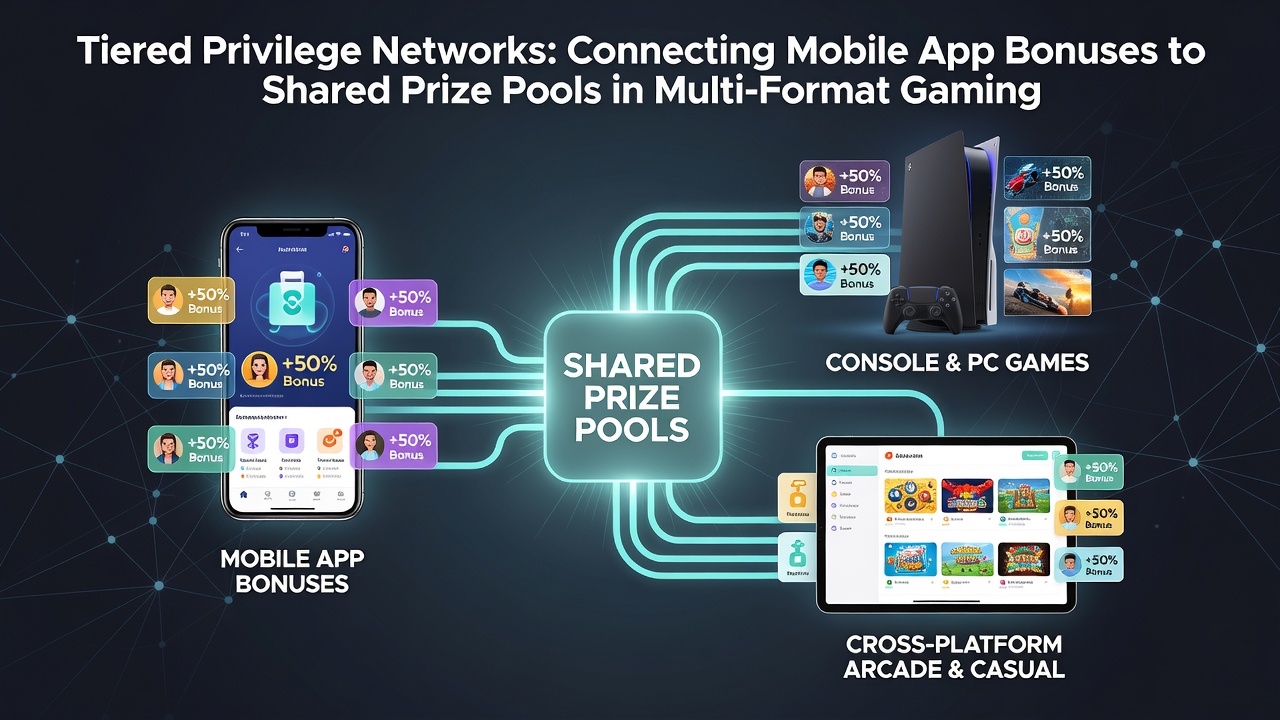
Operators have built tiered privilege networks that assign mobile users escalating access levels based on activity volume, then route accumulated bonuses directly into collective prize pools spanning slots, live dealer tables, and sportsbooks. These structures record each deposit and wager in centralized ledgers that automatically convert loyalty points into pool contributions while preserving separate format rules for gameplay itself.
Mechanics of Tier Assignment and Pool Allocation
Systems calculate tier status through rolling 30-day metrics that include total stakes, session frequency, and cross-format participation, after which higher tiers unlock multipliers applied to both personal bonuses and the percentage of those bonuses that flow into shared pools. Data from platform audits shows that users reaching the third tier contribute an average of 18 percent more per wager to collective funds than entry-level accounts, yet they also receive proportionally larger shares when pools reach distribution thresholds.
Allocation algorithms split contributions across formats according to predefined ratios updated quarterly, so a slots-heavy player still adds value to sports or table pools even when their own activity stays within one vertical. This design prevents any single format from dominating the shared resource while maintaining the integrity of each game’s random number generators and odds tables.
Cross-Platform Integration Patterns Observed in 2026
By July 2026 several major platforms had synchronized their mobile applications with unified backend ledgers that track bonus conversion in real time, allowing a single deposit to generate tier progress that simultaneously credits multiple prize pools. Industry reports indicate these synchronized ledgers reduced reconciliation errors by 27 percent compared with earlier fragmented systems that required manual transfers between verticals.
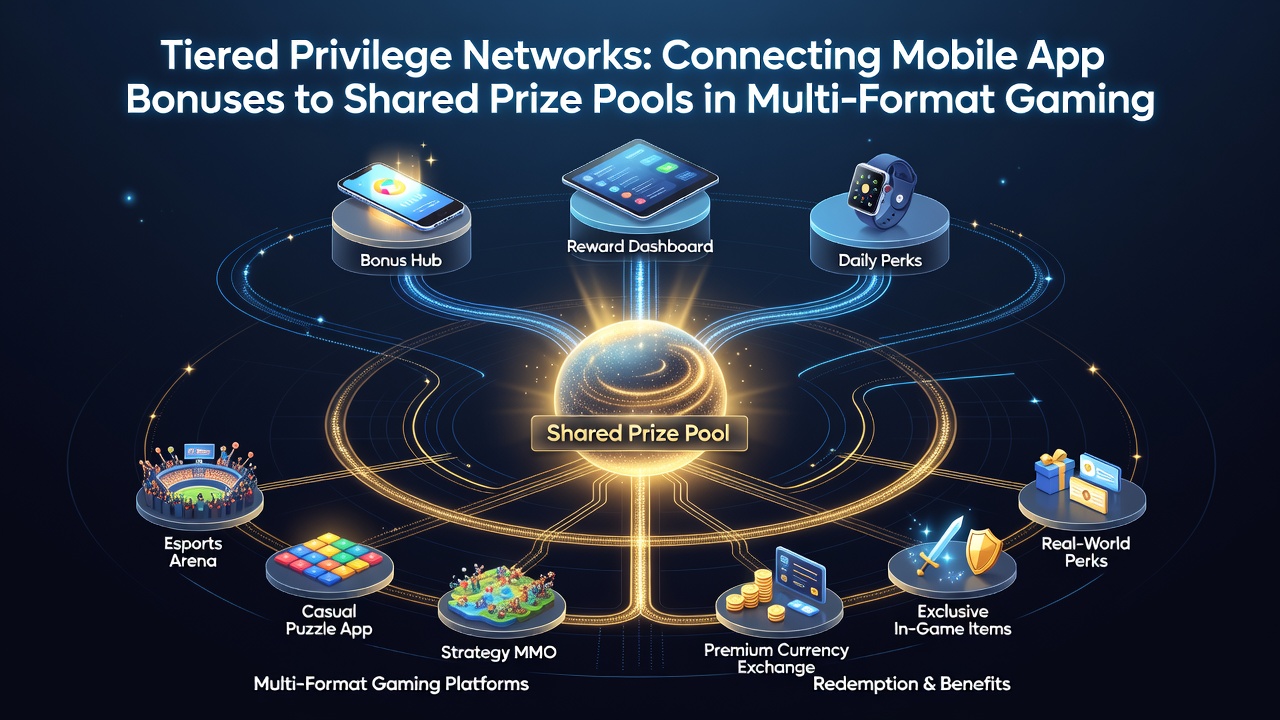
One documented case involved a European operator that linked its mobile rewards engine to three separate game servers through API calls executed every 15 seconds, resulting in near-instant visibility of pool balances for all tiered users. Similar architectures have appeared in North American and Australian markets, each adapting local currency and tax rules without altering the core tier-to-pool linkage.
Regulatory and Technical Considerations
Regulators in multiple jurisdictions now require operators to publish the exact formulas that determine how much of any bonus enters a shared pool, along with audit logs demonstrating that distributions occur only after independent verification of pool totals. Technical standards published by the Gaming Laboratories International specify data formats for these logs so third-party testers can confirm both fairness and correct tier application.
Security protocols isolate personal account data from pool ledgers through tokenization, ensuring that while contribution amounts are visible in aggregate, individual wagering histories remain protected under data-protection statutes. Research published by the University of Nevada, Reno examined 14 platforms using such tokenization and found no instances of cross-user data leakage during a 12-month monitoring period ending in early 2026.
Operational Outcomes Across Markets
Platforms that implemented tiered networks report measurable increases in session length, particularly among users who reach mid-tier status, because the visible connection between personal play and collective rewards encourages continued engagement across formats. Aggregate figures released by operator consortia show that shared-pool distributions occur on average every 14 days when networks cover at least four game types, compared with 21-day intervals when pools remain format-specific.
Developers continue to refine the weighting algorithms that decide how much weight each format receives in pool calculations, with recent updates incorporating real-time popularity metrics so that emerging game types can receive proportional funding without disrupting established distribution schedules. These adjustments occur through automated scripts that operators review monthly rather than through manual overrides.
Conclusion
Tiered privilege networks now form a standard component of multi-format mobile gaming infrastructure, linking individual bonus mechanics to collective prize pools through documented algorithms and audited ledgers. The approach allows operators to maintain format-specific rules while creating measurable pathways for player contributions to benefit wider participant groups, supported by technical standards and regulatory transparency requirements that continue to evolve through 2026.